
The relationship between what you eat and the health of your teeth is not a mystery—it is straightforward biology. Every time you consume food, particularly anything containing sugar, you are either supporting your oral health or feeding the bacteria in your mouth that cause decay. In extreme conditions, it is always better to visit a nearby dental clinic.
The bacteria that normally inhabit your mouth feed on sugar and use it to make acid. Your tooth enamel is attacked by this acid, which results in cavity formation. Diet affects more than just your teeth. Eating poor nutritional food leads to inflammation and gum disease, resulting in bone loss around teeth.
For patients seeking a Red Deer dentist, understanding how diet works is one of the most powerful preventive tools available. What you eat between dental visits has a greater impact on your oral health than almost anything else you can control.
Why Low-Sugar Fruits Are a Better Choice Than Sugary Snacks
The typical approach to healthy snacking is often misguided. Many people replace sugary processed snacks with dried fruits, fruit juices, or high-sugar fruits, thinking they are making a healthy choice. While these are better than candy, they still feed cavity-causing bacteria and cause the same acid damage.
On the other hand, whole fruits that are low in sugar provide real nourishment minus the dental damage. They offer:
- Vitamins and minerals from nature that support enamel and gum health
- The fibre that cleans your teeth while you chew
- Water content that dilutes acids and stimulates saliva production
- Polyphenols and antioxidants that have antimicrobial properties
When you choose fruits that don’t cause cavities, you are not just avoiding harm—you are actively supporting your oral health.
What Actually Makes a Fruit Tooth-Friendly?
Not all fruits are created equal when it comes to dental health. A tooth-friendly fruit has several characteristics:
- Low sugar content — below 10 grams per serving. This is critical because cavity-causing bacteria thrive on sugar.
- High water content — fruits with more water are less concentrated in sugar and naturally help rinse the mouth as you eat them.
- Fibre — creates a gentle brushing action as you chew, helping to clean tooth surfaces and between teeth.
- Protective compounds—vitamins C and A support gum health and enamel strength. Antioxidants have antimicrobial properties that fight cavity-causing bacteria.
- Lower acidity — while some acid is natural in fruit, excessively acidic fruits can erode enamel if consumed frequently.
- Whole fruit form—whole fruits preserve fibre, require chewing, and do not concentrate the sugar as juices or dried fruits do.
A dentist recommended fruit assessment looks at all these factors together to identify which options truly support oral health.
The Best Low-Sugar Fruits for Oral Health
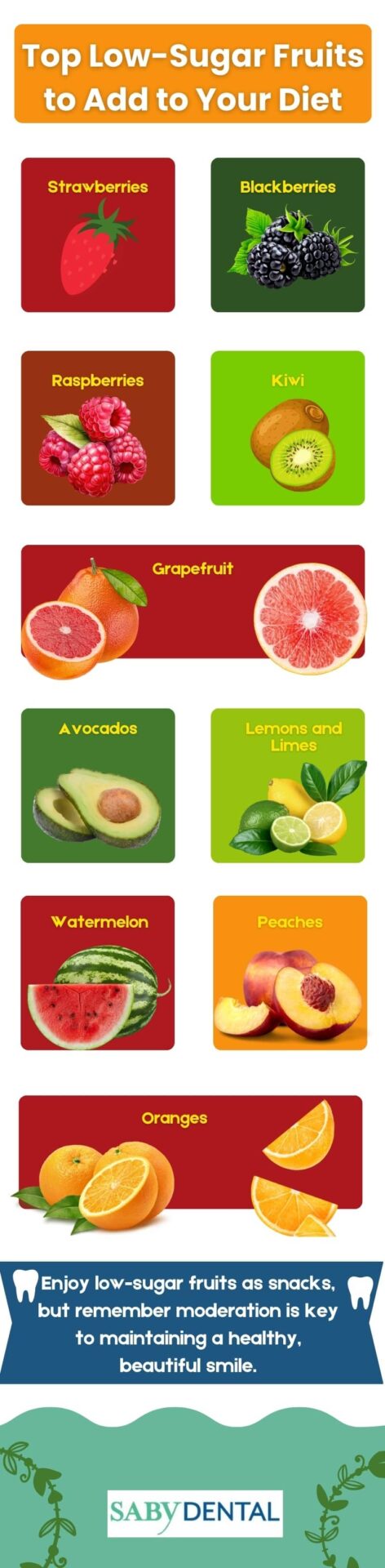
Strawberries
Strawberries contain only about 7 grams of sugar per cup and are packed with vitamin C—a critical nutrient for collagen formation in gums. They also contain malic acid, which has mild whitening properties for teeth.
The seeds in strawberries create a gentle mechanical cleaning action as you eat them. Their high water content makes them one of the most mouth-friendly berries available.
Raspberries
With just 5 grams of sugar per cup, raspberries are among the lowest-sugar fruits. They are rich in antioxidants, particularly anthocyanins, which have been shown to have antimicrobial properties against oral pathogens.
The delicate nature of raspberries means you chew them thoroughly, naturally stimulating saliva production.
Blackberries
Even lower in sugar than raspberries at just 4 grams per cup, blackberries are dental superfoods. They contain polyphenols that actively fight bacteria responsible for tooth decay and gum disease.
Their firm texture requires thorough chewing, which activates saliva—your mouth’s natural defence system against cavity formation.
Kiwi
Kiwis contain approximately 6 grams of sugar per fruit and are exceptionally high in vitamin C. One kiwi provides nearly 100% of your daily recommended vitamin C intake—essential for maintaining healthy gum tissue and preventing periodontal disease.
The small seeds in kiwis provide textural variety and encourage thorough chewing.
Grapefruit
With about 9 grams of sugar per half, grapefruit is a moderate sugar choice but offers exceptional nutritional benefits. It is rich in vitamin C and compounds that support immune function — important for fighting gum disease.
The acidity in grapefruit is relatively mild compared to other citrus fruits, making it a reasonable choice when consumed as part of a balanced meal.
Avocado
Though technically a fruit, avocados are unique—containing less than 2 grams of carbohydrate per serving and virtually no natural sugar. They are rich in healthy fats and vitamin E, which supports tissue health and healing.
Avocados require significant chewing, stimulating saliva production and promoting oral blood flow. It is one of the best fruits for teeth.
Lemons and Limes
These are rarely eaten as whole fruits but are worth mentioning because they contain minimal sugar — just 2 to 3 grams per fruit. When used to flavour water, they add vitamin C without the concentrated acidity of citrus juice.
Watermelon
Even though watermelon tastes sweet, it is mostly water and contains only around 11 grams of sugar per cup. Its high-water content is excellent for a mouth rinse and stimulating saliva.
The melon’s mild, balanced flavour means it is less acidic than many fruits.
Peaches
A medium peach has around 13 grams of sugar—so it’s moderately sweet—but it’s a healthy fruit. They are great sources of vitamin C, which nourishes the gums and strengthens the enamel.
The requirement to bite through the skin and chew the flesh provides natural tooth cleaning.
Oranges
While oranges contain more natural sugars than berries, they are high in vitamin C. When eaten as whole fruit rather than juice, the fibre content and natural dilution with pulp reduce the effect on teeth.
Fruits to Enjoy in Moderation — And Why
Bananas contain about 27 grams of sugar per medium fruit — high enough that they should be occasional treats rather than daily snacks. The thick texture also tends to stick to teeth.
- Grapes are concentrated sources of sugar and tend to remain on teeth longer. Dried grapes — raisins — are particularly problematic because the sugar is concentrated and sticky.
- Mangoes are delicious but contain about 45 grams of sugar per cup — better saved for occasional enjoyment rather than regular snacking.
- Dried fruits remove the water content, leaving concentrated sugars that cling to teeth. They should be occasional treats.
- Fruit juices, even unsweetened varieties, concentrate natural sugars while removing the protective fibre. They should be minimized or diluted significantly before consumption.
Dentist-Approved Tips for Eating Fruit Without Harming Your Teeth
- Whenever possible, consuming whole fruits is better than juices or dried ones. The actual mouth-friendly advantages come from the fibre, water quantity, and chewing requirement.
- Rinse your mouth with water after eating fruit, particularly citrus fruits. This neutralizes acids and washes away sugars.
- Wait 20 to 30 minutes after eating acidic fruits before brushing. Brushing immediately can damage enamel that has been temporarily softened by acid.
- Don’t snack often. Every time we eat, we introduce sugar and acid in the mouth. When fruits are consumed as a meal, it reduces the exposure.
- Enjoy fruits, especially those that contain some protein or healthy fats. The absorption of sugar is delayed, so the oral pH is balanced.
- Chew thoroughly, stimulating saliva production — your mouth’s natural cavity-fighting mechanism.
Invest in Your Oral Health Through Smart Food Choices
Your diet is one of the most powerful tools you have for maintaining healthy teeth and gums. By choosing the best fruits for teeth and understanding how food affects your oral health, you are taking genuine control of your long-term well-being.
The Saby Dental team believes that it is as important to teach patients to adopt healthy habits as it is to treat. Start your journey to better oral health now. We offer personal support and expert care to assist you along the way. Reach out to us today to schedule your appointment and start your journey toward a stronger and healthier smile.
Frequently Asked Questions
Are all berries equally good for teeth?
Most berries are excellent for oral health — strawberries, raspberries, and blackberries are all low in sugar and rich in protective compounds, making them among the best fruit choices for your teeth.
Can I eat fruit if I have gum disease?
Yes — in fact, many fruits rich in vitamin C actively support gum healing, though you should focus on low-sugar options and follow good eating hygiene practices to avoid irritating inflamed gums.
Is fresh fruit always better than frozen fruit for dental health?
Frozen fruit without added sugars is nutritionally equivalent to fresh fruit and equally good for your teeth—the freezing process preserves the nutrients that support oral health.
How soon after eating acidic fruits like oranges should I wait before brushing?
Wait at least 20 to 30 minutes after consuming acidic fruits before brushing—brushing immediately can damage enamel that has been temporarily softened by the fruit’s acidity.
Can fruit juice ever be a good choice for oral health?
Whole fruit is always preferable to juice because juice removes protective fibre while concentrating sugars—if you consume juice, dilute it significantly with water and drink it with meals rather than as a standalone snack.