What if that pink tint in the sink isn’t a sign you’re brushing too hard, but a distress signal from your body that your foundation is under threat? It’s naturally unsettling to see blood when you’re just trying to maintain your smile, and you might be searching for how to stop gum bleeding before the problem worsens. You may feel a flash of anxiety about tooth loss or wonder if you should simply stop brushing those tender areas to avoid discomfort. You aren’t alone, as over 42 percent of adults face some form of periodontal disease. We understand how confusing it is to balance a thorough clean with the fear of causing more irritation.
This guide will show you exactly how to restore your oral health by shifting your focus from aggressive scrubbing to nurturing your living tissue. You’ll learn practical steps you can take at home today and realize when it’s time to visit our Red Deer clinic for professional support. We’ll walk through the differences between gingivitis and periodontitis and help you establish a gentle, effective routine that protects your smile for years to come.
Key Takeaways
- Recognize that bleeding is an inflammatory response to plaque bacteria, not simply a result of brushing with too much pressure.
- Master the Modified Bass Method and C-shape flossing to learn how to stop gum bleeding by cleaning effectively beneath the gum line.
- Understand how Vitamin C supports tissue repair and why certain habits like smoking can dangerously mask the early warning signs of gum disease.
- Distinguish between reversible gingivitis and the bone loss associated with periodontitis to take action before damage becomes permanent.
- Learn how professional treatments like scaling and root planing provide a clinical reset to restore your gums to a healthy, comfortable state.
Understanding Why Your Gums Bleed: It Is Not Just Brushing Too Hard
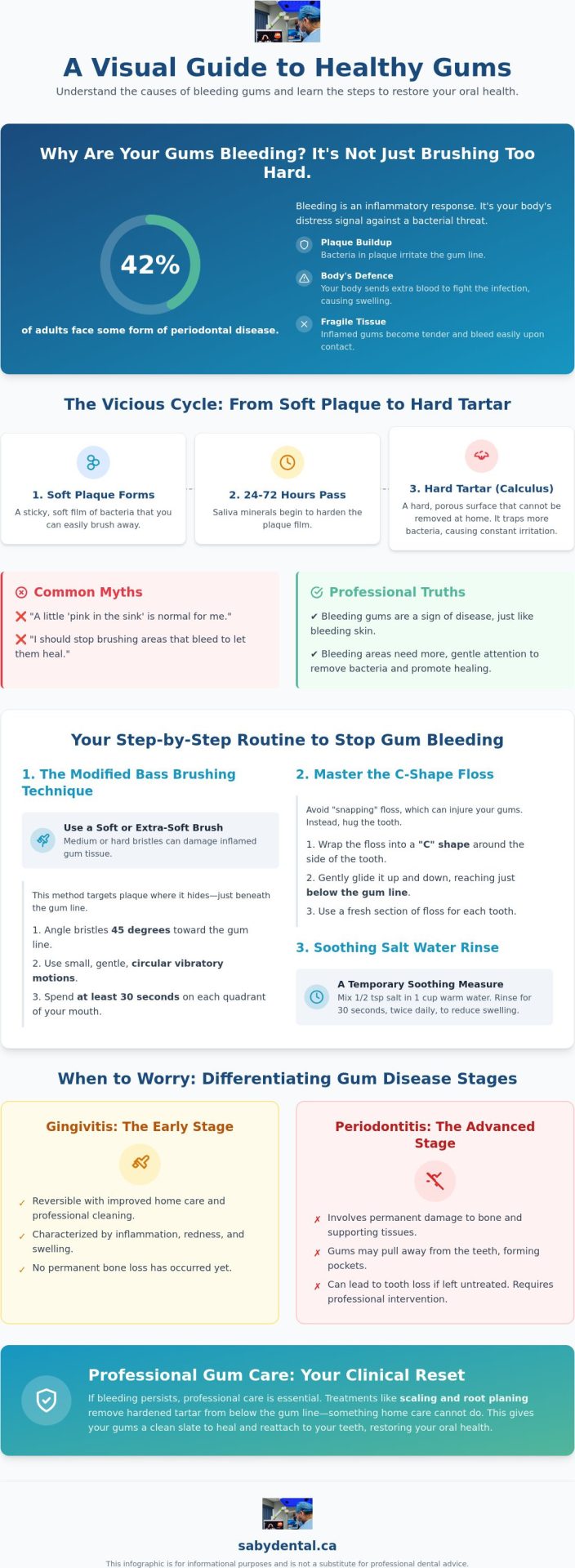
Seeing blood in the sink often leads to a common mistake: assuming you’ve simply been too aggressive with your toothbrush. While technique matters, bleeding is rarely a mechanical error. Instead, it’s a primary symptom of Gingivitis, which is an inflammatory response to bacteria living along your gum line. When plaque is allowed to sit, your body perceives it as an invader and sends extra blood to the area to fight the infection. This process makes the tissue swollen, tender, and incredibly fragile. If you’re wondering how to stop gum bleeding, the first step is realizing that your gums aren’t just sensitive; they’re actively trying to protect you from a bacterial threat.
Beyond hygiene, your body’s internal chemistry plays a significant role in how your tissues react. Hormonal shifts during pregnancy can make your gums much more reactive to even small amounts of plaque, a condition often called pregnancy gingivitis. Similarly, certain medications that thin the blood can increase your tendency to bleed during your daily routine. We always take the time to review your medical history because these systemic factors change the way we approach your personalized care plan.
The Plaque to Tartar Pipeline
Plaque is a soft, sticky film that you can easily brush away, but it doesn’t stay soft for long. Within 24 to 72 hours, minerals in your saliva cause this film to harden into tartar, also known as calculus. Once this transition happens, you cannot remove it with a toothbrush or floss at home. Tartar acts like a microscopic coral reef, providing a hard, porous surface where even more harmful bacteria can thrive and hide from your cleaning efforts. This cycle creates a permanent state of irritation that only professional scaling can resolve.
Common Myths About Bleeding Gums
Many people believe that “pink in the sink” is just a personal quirk of their mouth. This is a dangerous misconception. If your scalp bled every time you brushed your hair, you would seek medical attention immediately; your gums deserve that same level of concern. Another common myth is that you should stop brushing the areas that bleed to let them “rest” or heal. In reality, these bleeding areas need more attention, not less. While you should switch to a gentler technique, avoiding these spots allows bacteria to multiply unchecked, which only worsens the inflammation. Learning how to stop gum bleeding requires a shift in perspective: you aren’t scrubbing a surface, you’re caring for living, resilient tissue.
How to Stop Gum Bleeding at Home: A Step-by-Step Care Routine
When you notice blood during your morning routine, your first instinct might be to pull back and avoid the area. However, the path to healing requires a precise and intentional approach to your daily habits. Success starts with the right tools. You should only use soft or extra-soft bristles, as medium or hard bristles act like sandpaper on already inflamed tissue. A clinical review of gingivitis confirms that thorough plaque removal is the cornerstone of recovery, but the specific technique you use determines whether you’re supporting or irritating your gums.
While you’re refining your physical technique, a warm salt water rinse can provide immediate, soothing relief. Salt helps draw out excess fluid from inflamed tissues, which reduces swelling and acts as a gentle, natural antiseptic. Simply mix half a teaspoon of salt into a cup of warm water and rinse for thirty seconds twice a day. This is a helpful temporary measure as you focus on how to stop gum bleeding through better mechanical cleaning. If you find the bleeding persists despite these changes, a professional dental exam can help identify any underlying issues that require clinical intervention.
The Modified Bass Brushing Technique
Most of us were taught to scrub our teeth with long, horizontal strokes. To truly protect your gums, you should switch to the Modified Bass Method. First, angle your toothbrush bristles at a 45-degree angle toward the gum line. This allows the bristles to reach slightly under the edge of the tissue where bacteria tend to congregate. Instead of scrubbing, use small, circular vibratory motions to break up plaque. Ensure you spend at least 30 seconds on each quadrant of your mouth to give every tooth the attention it deserves.
Mastering the C-Shape Floss
Flossing should never involve “snapping” the string between your teeth. That sudden force often causes trauma to the very tissue you’re trying to save. Instead, guide the floss gently through the contact point using a sawing motion. Once you’re between the teeth, wrap the floss around the side of the tooth in a “C” shape. Slide it gently beneath the gum line until you feel light resistance, then move it up and down to clear away debris. If you have wider gaps or are cleaning around dental implants, interdental brushes are often a more effective and comfortable alternative to traditional string floss. Using these tools correctly is a vital part of learning how to stop gum bleeding for the long term.
Lifestyle and Nutrition: Supporting Gum Health from the Inside Out
While your physical routine is essential, your body requires specific nutrients to repair the soft tissues surrounding your teeth. Vitamin C is perhaps the most critical component, as it plays a vital role in collagen synthesis. Without a sufficient supply, your gums can become weak and more susceptible to the Symptoms and causes of gingivitis. Beyond nutrition, staying hydrated is a simple yet powerful way to support your mouth. Water maintains a steady flow of saliva, which acts as your body’s natural defence by neutralizing the acids produced by plaque bacteria.
Chronic stress also plays a silent role in your oral health. When you’re under constant pressure, your body produces higher levels of cortisol, which can suppress your immune system’s ability to fight off oral infections. If you’re investigating how to stop gum bleeding, looking at your sleep patterns and stress levels can be just as vital as checking your toothbrush. We often find that patients who prioritize their overall well-being see a noticeable improvement in the resilience of their gum tissue.
The Smoking Paradox
Smoking creates a unique challenge for both patients and dentists. Nicotine is a vasoconstrictor, meaning it narrows the blood vessels in your gums. This often hides the inflammation that would otherwise cause bleeding. You might think your gums are healthy because you don’t see blood, while severe disease is actually progressing beneath the surface. Quitting is the most significant lifestyle change you can make to ensure the long-term survival of your natural teeth and the success of any restorative treatments.
Anti-Inflammatory Foods for Your Mouth
Your diet can either fuel or fight the bacteria in your mouth. Processed sugars and refined carbohydrates are the primary food source for the bacteria that cause plaque. By reducing these, you effectively starve the infection. Instead, focus on nutrient-dense options:
- Vitamin C-rich foods: Red peppers, oranges, and strawberries help rebuild damaged tissue.
- Vitamin K: Leafy greens like kale and spinach support healthy bone density and proper blood clotting.
- Omega-3 fatty acids: Found in fish and walnuts, these help reduce systemic inflammation throughout the body.
While these dietary shifts are excellent for maintenance, they cannot remove existing tartar that has already hardened. If you are struggling with how to stop gum bleeding, these changes work best when paired with regular professional hygiene cleanings to provide a clean slate for your health. A balanced approach ensures your gums have the internal resources they need to stay firm and healthy.
When to Worry: Differentiating Gingivitis from Periodontitis
Understanding where you stand on the spectrum of oral health is the best way to lower the anxiety that often comes with dental concerns. While you’re researching how to stop gum bleeding, it’s essential to distinguish between a temporary inflammation and a long term threat to your smile’s foundation. Gingivitis is the early, reversible stage of gum disease. At this point, the infection is limited to the soft tissues, and with professional help, you can completely restore your health. However, if the irritation persists, it progresses into periodontitis. This is a more serious condition where the infection begins to destroy the bone and ligaments that hold your teeth in place. This stage is considered irreversible because, unlike soft tissue, lost bone does not naturally grow back.
As the disease advances, the attachment between your teeth and gums begins to break down, creating what we call periodontal pockets. These are small gaps that form as the gums pull away from the tooth surface. These pockets act as a sanctuary for bacteria, trapping plaque and food particles in areas that your toothbrush or floss simply cannot reach. The deeper these pockets become, the more difficult it is for you to manage the infection on your own. This is why a clinical assessment is so important; we use specialized tools to measure these spaces and determine exactly how much support your teeth still have.
The Signs of Progression
There are several red flags that suggest your condition has moved beyond simple gingivitis. Persistent bad breath, or halitosis, is often a sign that bacteria are thriving deep within periodontal pockets. You might also notice visible recession, where your teeth appear longer than they used to because the gum line is retreating. Another subtle sign is a change in your bite. If your teeth feel like they are shifting, or if you notice that a dental appliance like a night guard no longer fits comfortably, the underlying bone may be affected. These changes should never be ignored, as they indicate that the structural integrity of your mouth is under pressure.
Why “Waiting it Out” is Dangerous
The danger of gum disease is that it is often painless until it reaches an advanced stage. Choosing to wait can lead to tooth loss and may complicate other areas of your physical health. Scientific evidence has established a clear link between chronic gum inflammation and systemic issues such as heart disease and the management of diabetes. By learning how to stop gum bleeding today, you are doing more than just saving your teeth; you are protecting your entire body from the effects of chronic infection. If you’ve noticed any of these signs, the most compassionate thing you can do for yourself is to seek a professional gum disease treatment consultation to stop the progression before it causes permanent damage.
Professional Gum Care in Red Deer: The Saby Dental Approach
At Saby Dental, we believe that clinical excellence should always be paired with a warm, welcoming atmosphere. If you’ve been struggling with how to stop gum bleeding despite improving your flossing habits, a professional intervention is often the missing piece of the puzzle. Our team, led by Dr. Jas Sandhu, has served the Red Deer community for over 30 years, and we’ve built our practice on a foundation of trust and personalized attention. We view professional gum disease treatment as a clinical “reset button” for your mouth. By removing the hardened tartar that your toothbrush cannot reach, we create a healthy environment where your body’s natural healing processes can finally take over.
It’s also vital to remember that healthy gums are the essential frame for any aesthetic improvements you might desire. If you are considering porcelain veneers or a full smile makeover, the health of your supporting tissues is our first priority. A beautiful smile is only as strong as the foundation it sits upon, and we’re here to ensure that foundation is resilient and comfortable. We invite you to join us for a personalized consultation where we can catch potential issues before they become dental emergencies.
What Happens During a Periodontal Exam?
Many patients feel a flicker of anxiety when they hear the word “exam,” but our process is designed to be gentle and transparent. We use a method called periodontal probing to carefully measure the depth of the spaces between your teeth and gums. These measurements tell us exactly where the tissue is healthy and where it might need extra support. We also utilize digital X-rays to visualize the bone levels around your teeth, giving us a complete picture of your oral health without any guesswork. Throughout this process, our compassionate team is right beside you, explaining every step to ensure you feel safe and informed.
Building a Long-Term Prevention Plan
Once we’ve addressed the immediate inflammation, we shift our focus to long-term maintenance. While the standard recommendation is a cleaning every six months, some patients benefit from a three-month or four-month schedule to keep bacteria levels under control. We don’t believe in a one-size-fits-all approach. Instead, we work with you to design a customized home-care plan that fits the specific needs of your family. Learning how to stop gum bleeding is simply the first step toward a lifetime of confident, pain-free smiles. We’re here to be your dedicated mentors in that journey, providing the modern tools and steady presence you need to maintain your health for years to come.
Take Control of Your Oral Health Foundation
Your journey to a healthier smile begins with recognizing that bleeding gums are a signal from your body, not a permanent condition you must accept. By refining your technique at home and supporting your tissues with proper nutrition, you’ve already taken the first steps toward recovery. However, addressing the underlying cause often requires the specialized care that only a clinical environment can provide. When you’re investigating how to stop gum bleeding for good, a professional assessment ensures that your efforts are built on a clean and stable foundation.
At Saby Dental, we’ve spent over 30 years serving the Red Deer community with patient-centric care designed specifically to lower dental anxiety. We combine advanced diagnostic technology with a gentle, supportive approach to help you realize your goals for long-term health. Whether you need a simple reset or a comprehensive plan, we’re here to guide you with compassion. Book your periodontal health check at Saby Dental in Red Deer today and give your smile the dedicated attention it deserves. Your future self will thank you for the confidence and comfort that comes with a healthy foundation.
Frequently Asked Questions
Is it normal for gums to bleed when flossing for the first time in a while?
It’s quite common for gums to bleed when you restart a flossing habit after a long break. This happens because the tissue is currently inflamed and sensitive to the physical removal of plaque. If you continue to floss gently every day, the bleeding should subside within a week or two as your gums become healthier and more resilient to the cleaning process.
How long does it take for gums to stop bleeding after I improve my hygiene?
You should see a noticeable difference within 7 to 14 days of consistent, proper brushing and flossing. If you’ve been wondering how to stop gum bleeding and don’t see improvement after two weeks of a dedicated routine, it often means tartar has hardened beneath the gum line. At this stage, professional intervention is required because a toothbrush cannot remove those mineralized deposits.
Can I use mouthwash to stop my gums from bleeding?
Mouthwash can be a helpful supplement, but it isn’t a standalone cure for bleeding gums. While antibacterial rinses can reduce the number of bacteria in your mouth, they cannot remove the physical plaque or tartar that causes the irritation. You should use it as an extra layer of protection alongside proper brushing and flossing rather than as a primary solution for the problem.
What vitamin deficiency causes bleeding gums most often?
A deficiency in Vitamin C is most frequently linked to gum bleeding since it is essential for collagen production and tissue repair. Vitamin K deficiency can also play a role because it is necessary for proper blood clotting. While diet is important, these issues are best diagnosed through a consultation with your doctor to determine if a supplement is actually necessary for your health.
Should I see an emergency dentist if my gums won’t stop bleeding?
Seek emergency dental care if the bleeding is heavy, persistent, or accompanied by severe pain and swelling. While minor bleeding during brushing is common, uncontrollable bleeding or a metallic taste that won’t go away could indicate an acute infection. It’s best to have a professional assessment if you’re unsure how to stop gum bleeding when the flow seems excessive or won’t clot naturally.
Are bleeding gums a sign of pregnancy gingivitis?
Hormonal changes during pregnancy increase blood flow to the gum tissues, making them much more sensitive to plaque. This often results in swelling and bleeding even if your hygiene habits haven’t changed. This condition is known as pregnancy gingivitis. We often recommend more frequent cleanings during your pregnancy to manage this inflammation safely for both you and your baby while protecting your long term oral health.
Can salt water rinses actually heal gum disease?
Salt water rinses are excellent for soothing inflammation and reducing bacteria temporarily, but they cannot heal established gum disease on their own. They act as a gentle, natural antiseptic that draws out excess fluid from swollen tissues. However, they won’t remove the hardened tartar deposits that keep the infection active. You should use them as a supportive measure until you can receive a professional cleaning.
Why do my gums bleed only in one specific spot?
Localized bleeding usually points to a specific irritant, such as a piece of food trapped under the gum or a localized area of heavy tartar buildup. It could also be caused by a poorly fitting dental restoration or brushing that specific area with too much pressure. If one spot consistently bleeds while the rest of your mouth is healthy, we need to examine it to rule out a localized infection.