Imagine waking up on a quiet morning in Red Deer, but instead of feeling refreshed, you are met with a dull, throbbing headache and a jaw that feels like it’s been clamped shut all night. It’s incredibly frustrating when simple pleasures, like enjoying a meal at your favourite restaurant, become sources of stress because you need effective tmj treatment. You might worry that your jaw will lock permanently or that constant grinding is slowly wearing down your teeth. We understand how these concerns can weigh on your mind and impact your daily comfort.
The good news is that you don’t have to accept this discomfort as your permanent reality. Understanding the root causes of jaw dysfunction is the first step toward protecting your smile and reclaiming your peace of mind. By addressing the source of your tension, you can stop the cycle of pain and prevent long-term damage to your dental health. In this guide, we’ll explore how modern therapeutic approaches and advanced technology can restore your natural jaw movement, alleviate those chronic morning headaches, and ensure your teeth remain strong and healthy for years to come.
Key Takeaways
- Understand the vital distinction between your jaw joint and the disorders causing your discomfort to help you communicate more effectively with your provider.
- Discover how chronic stress and bruxism impact your jaw’s anatomy and why addressing these factors is essential for lasting comfort.
- Learn how specialized tmj treatment can stop accelerated teeth wear and protect the natural shape and strength of your smile.
- Compare the benefits of professional, custom-fitted night guards over drugstore alternatives to find the most reliable solution for your needs.
- Explore how a root-cause approach to jaw pain ensures your recovery is personalized, thorough, and focused on your long-term well-being.
Understanding TMJ Disorders: More Than Just a Clicking Jaw
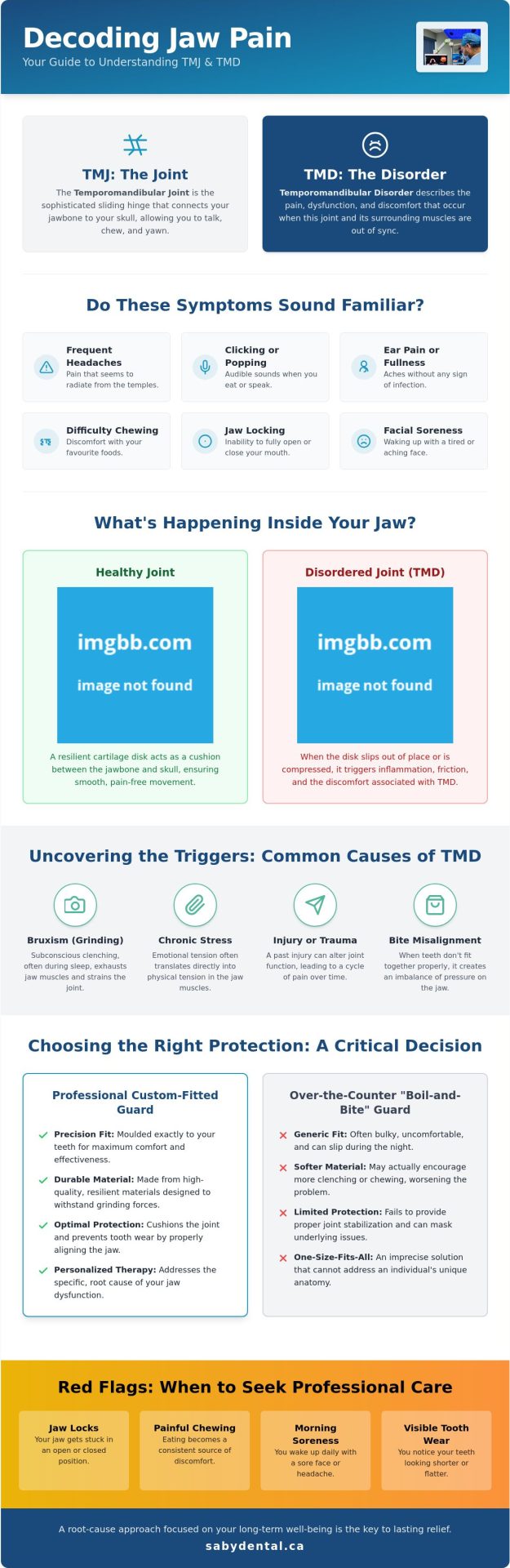
The temporomandibular joint, commonly known as the TMJ, acts as a sophisticated sliding hinge that connects your jawbone to your skull. This joint is one of the most complex in your body, allowing for the multidimensional movement required to speak, chew, and yawn comfortably. While the term TMJ refers to the joint itself, TMD (temporomandibular disorder) describes the pain or dysfunction that arises when the joint and its surrounding muscles are out of sync. Distinguishing between the joint and the disorder is a helpful first step as you begin exploring tmj treatment options in Red Deer.
When you feel persistent facial pain, your first instinct might be to visit a family doctor. While general practitioners provide essential care, a dentist is often the most effective first line of defence for jaw issues. This is because your jaw health is deeply connected to your occlusion, or how your teeth fit together. We focus on the structural relationship between your teeth, muscles, and joints to identify if a misaligned bite is the true source of your tension. By looking at the problem through a dental lens, we can offer solutions that a general medical exam might overlook.
Common Symptoms of TMD
TMD symptoms are often diverse and can mimic other health concerns, which sometimes leads to a delay in seeking care. You might notice persistent clicking or popping sounds whenever you eat or speak; a sign that the internal disk may be displaced. Many patients also struggle with frequent headaches or migraines that seem to radiate from the temples. Another common but confusing symptom is an earache or a sensation of fullness in the ear, even when there is no underlying infection. Understanding Temporomandibular Joint Dysfunction helps you see these seemingly unrelated pains as part of a single, treatable condition.
When to Seek Professional TMJ Therapy
Knowing when to transition from home care to professional tmj treatment is vital for your long-term health. You should watch for “red flag” symptoms, such as your jaw locking in an open or closed position, or a sudden inability to chew your favourite foods without significant discomfort. If you wake up with a sore face or notice your teeth are looking shorter or flatter, these are clear signs that your jaw is under immense pressure. Early intervention is always the preferred path. It allows us to use conservative, non-invasive methods to restore balance before the joint sustains permanent damage. A professional evaluation provides the clarity you need to move past self-diagnosis and start a journey toward lasting relief.
The Anatomy of Jaw Pain: Why Your Temporomandibular Joint Misbehaves
To understand why your jaw hurts, we must look closely at the delicate mechanics inside the joint. At the heart of this system is a small, resilient disk of cartilage that acts as a cushion between the jawbone and the skull. This disk ensures that your jaw moves smoothly without bone-on-bone friction, allowing you to speak and eat without a second thought. However, when this disk slips out of place or becomes compressed, it triggers the inflammation and discomfort that many people in Red Deer experience daily.
While the cartilage disk is designed for durability, it is not invincible. Factors like physical trauma from a past injury or the gradual onset of arthritis can alter how the joint functions over time. These changes might start small, but they eventually lead to a cycle of pain that requires a professional tmj treatment strategy to resolve. If you’ve noticed your jaw feels tight or off-balance, a comprehensive dental exam can help pinpoint the exact cause of your discomfort.
The Role of Bruxism and Stress
Subconscious clenching during sleep can exhaust your masticatory muscles, which are the primary muscles used for chewing. This persistent pressure, often referred to as bruxism, forces the cartilage disk out of its natural position and strains the surrounding ligaments. Many patients find that their stress levels directly correlate with the intensity of their jaw pain. While many people start by exploring conservative TMJ treatment options like heat packs or stress management, these efforts don’t always address the structural strain caused by nightly grinding. Simply trying to relax is rarely enough to fix a disk that has been physically displaced by years of tension.
How Bite Alignment Affects the Joint
A “bad bite,” or malocclusion, is frequently the silent architect of jaw pain. When your upper and lower teeth do not meet harmoniously, your jaw muscles must constantly adjust to find a comfortable resting spot. This chronic overcompensation leads to muscle fatigue and joint inflammation. The situation can become more complex if you have missing teeth, as the remaining teeth may shift, causing the jaw to move into unnatural, strained positions. Over time, an uneven bite can wear down the joint’s protective cartilage, making a long-term tmj treatment plan essential for preserving your oral health. Restoring the proper alignment of your teeth is often the most effective way to take the pressure off your joints and provide lasting relief.
The Hidden Connection: How TMJ Affects Your Teeth and Smile
While many people associate jaw issues solely with muscle tension or clicking sounds, the physical impact on your teeth is often the most permanent consequence of an untreated disorder. When your jaw joint doesn’t sit correctly in its socket, your teeth are forced to meet in ways they weren’t designed for. This misalignment creates a collision course every time you chew or swallow, leading to accelerated wear that can age your smile by decades. Seeking professional tmj treatment isn’t just about comfort; it is a vital step in preserving the actual structure of your teeth.
If left unaddressed, this constant friction strips away the protective enamel, leaving the softer dentin underneath exposed. This process doesn’t just change how your smile looks; it changes how it functions. Understanding the full scope of TMJ disorder diagnosis and treatment is essential because, without functional stability, even the most beautiful cosmetic dental work is at risk of premature failure. We prioritize establishing a healthy bite first, ensuring your teeth aren’t subjected to destructive forces that cause chipping and thinning.
Recognizing Signs of Teeth Wear
Identifying the early signs of dental wear can save you from extensive restorative work later. You might notice your teeth appearing shorter or having flattened edges, especially the front incisors that define your smile. As the enamel thins, you may experience increased sensitivity to hot or cold temperatures. In some cases, the edges of the teeth become translucent or see-through. Frequent chipping of natural teeth or even high-quality dental crowns without a clear injury is another strong indicator that your jaw mechanics are out of balance.
Protecting Your Restorative Dental Work
We often see patients who are excited to transform their appearance with porcelain veneers or a full smile makeover. However, if the underlying jaw dysfunction isn’t corrected first, the same grinding forces that destroyed your natural teeth will likely damage your new restorations. By prioritizing tmj treatment before pursuing cosmetic enhancements, we ensure that your investment is protected. A stable foundation allows your dental implants and veneers to last for their intended lifespan. We often recommend custom-fitted night guards as a final layer of protection, acting as a buffer that absorbs the pressure of subconscious clenching and keeps your restored smile looking its best.
Exploring TMJ Treatment Pathways: From Conservative Care to Professional Therapy
Finding the right path to relief often begins with a focus on immediate comfort and long-term stability. We believe in a staged approach that prioritizes non-invasive methods, allowing your jaw muscles the opportunity to rest and heal. For patients experiencing acute flare-ups, the temporary use of muscle relaxants or anti-inflammatories can be incredibly helpful. These medications serve as a bridge, reducing inflammation and breaking the cycle of pain while we develop a more comprehensive tmj treatment strategy tailored to your unique needs.
While managing pain is the first priority, the ultimate goal is to address the underlying structural issues. This might involve looking at how your teeth align and how that alignment impacts your joint health. By moving beyond surface-level symptoms, we can create a plan that not only stops the pain but also prevents it from returning. This methodical process ensures that every step we take is intentional and focused on your total comfort.
The Benefits of Custom Night Guards
A custom-fitted night guard is often the most effective tool for managing subconscious grinding and clenching. While drugstore “boil-and-bite” options are easily accessible, they often lack the precision required to truly protect your joint. A professional appliance is designed to decompress the jaw joint during sleep, providing a stable resting position that prevents muscle exhaustion. Because these guards are crafted from high-quality, professional-grade materials, they offer superior durability and a much slimmer, more comfortable profile than over-the-counter alternatives. A precise fit is vital; an ill-fitting guard can inadvertently worsen your misalignment by forcing your jaw into an awkward position.
Advanced Therapeutic Interventions
For many patients, long-term relief requires realigning the bite to ensure the jaw can function without constant strain. Orthodontic solutions like Invisalign are often used as part of a tmj treatment plan to move teeth into a more harmonious position. If your teeth have already suffered significant wear, we may use dental crowns to restore the proper height and biting surface of your teeth. This transition from pain management to functional restoration is a key part of our commitment to your long-term health. If you are ready to find a permanent solution for your jaw pain, you can request a comprehensive evaluation to explore which therapeutic path is right for you.
Compassionate TMJ Therapy in Red Deer: The Saby Dental Approach
Choosing the right clinic for your jaw care is a personal decision that directly impacts your daily quality of life. At Saby Dental, Dr. Jas Sandhu is deeply committed to identifying the root cause of your discomfort rather than just managing the surface-level symptoms. We understand that chronic jaw pain can be an isolating and anxious experience. That is why we’ve designed our Red Deer clinic to be a warm, welcoming space where you feel heard and supported from the moment you arrive. Our goal is to lower the barriers of anxiety by providing a steady, calming presence and personalized attention that prioritizes your peace of mind.
You might feel overwhelmed by the complexity of jaw dysfunction, but our methodical approach simplifies the path to relief. We use a “need-and-resolution” structure for every case, identifying your specific concerns and immediately following them with a description of how our modern methodology addresses them. This transparent communication helps build a foundation of trust, ensuring you feel confident in the expertise behind your tmj treatment plan. We also believe in billing transparency and follow the current Alberta Dental Association Suggested Fee Guide to provide clarity for our patients.
Our Diagnostic and Treatment Process
Our comprehensive dental exam process utilizes advanced diagnostic tools to map your jaw movement and bite force with clinical precision. We use digital imaging to visualize the exact position and health of your joints, which is essential for an accurate diagnosis. This data allows us to create a personalized treatment plan that addresses both your immediate pain and any existing teeth wear you’ve experienced. By integrating TMJ therapy with restorative care, such as dental crowns or veneers, we don’t just stop the clicking or clenching; we rebuild the functional harmony and aesthetics of your smile.
Why Choose a Local Red Deer Dentist for TMJ?
Selecting a local provider for your tmj treatment offers significant advantages for your long-term recovery. Jaw realignments and custom night guard fittings often require subtle adjustments over several weeks to ensure the best possible outcome. Having a trusted professional nearby means you can easily access the ongoing support and follow-up care necessary for lasting comfort. With over 30 years of history serving families in our community, we are proud to be a reliable neighbour and a dedicated mentor for your oral health journey.
If you are ready to wake up without a headache and enjoy your favourite meals again, we’re here to guide you toward a solution. Schedule your TMJ consultation at Saby Dental today and take the first step toward a more comfortable, functional, and confident future.
Reclaiming Your Comfort and Lasting Smile
You deserve to live without the constant weight of jaw tension or the worry of permanent dental wear. By understanding that your jaw health is the foundation of a functional smile, you’ve already taken a vital step toward long-term relief. Whether your discomfort stems from nightly bruxism or a misaligned bite, professional tmj treatment offers a clear path to restoring your natural movement and protecting your teeth for years to come.
At Saby Dental, we combine over 30 years of community service with advanced diagnostic technology to map your unique needs with precision. Led by Dr. Jas Sandhu, our modern clinic is designed to be a steady, calming presence where your comfort is always the priority. We focus on identifying the root cause of your pain so that your recovery is both thorough and lasting. If you’re ready to leave morning headaches behind and reclaim your peace of mind, we’re here to help.
Book Your TMJ Assessment at Saby Dental to begin your journey toward a pain-free future. We look forward to welcoming you into our warm, supportive environment soon.
Frequently Asked Questions About TMJ Relief
Can TMJ disorders go away on their own without treatment?
While mild jaw strain caused by temporary stress or a minor injury may resolve with rest and a soft food diet, chronic TMJ disorders rarely disappear without professional attention. Left unaddressed, the underlying misalignment can lead to permanent enamel loss and worsening muscle tension. Early intervention ensures that we can use conservative methods to restore balance before the joint sustains significant structural damage or requires more complex restorative work.
Is TMJ treatment covered by dental insurance in Alberta?
Coverage for tmj treatment depends entirely on your specific insurance provider and your individual plan details. Many Alberta dental plans follow the Suggested Fee Guide for diagnostic exams and custom appliances, but the extent of coverage for therapeutic procedures varies significantly between carriers. We recommend contacting your provider directly or bringing your plan details to your assessment so we can help you understand your available benefits and any out of pocket costs.
How do I know if my headaches are caused by TMJ or something else?
Headaches caused by jaw dysfunction often present as a dull, throbbing ache in the temples or behind the eyes, frequently appearing right after you wake up in the morning. You might also notice these headaches coincide with jaw clicking, facial tenderness, or a feeling of unexplained tooth sensitivity. A comprehensive evaluation at our clinic is the most reliable way to determine if your bite is the true architect of your discomfort.
What is the difference between a night guard and a TMJ splint?
A standard night guard is primarily designed to act as a protective barrier that prevents your teeth from grinding against each other during sleep. In contrast, a TMJ splint is a more sophisticated therapeutic appliance designed to physically guide your jaw into a healthier, more relaxed resting position. While both offer protection, a splint focuses on healing the joint mechanics and repositioning the jaw rather than just stopping tooth wear.
Can Invisalign help treat TMJ by correcting my bite?
Invisalign can be an effective part of a tmj treatment plan if your jaw pain is rooted in malocclusion or an uneven bite. By gently moving your teeth into their ideal alignment, we can reduce the constant muscle strain required to close your jaw comfortably. Once your teeth meet harmoniously, the pressure on your temporomandibular joints often diminishes, providing long term functional relief and protecting your teeth from further damage.
Are there specific exercises I can do at home to relieve jaw pain?
Gentle stretching and controlled opening exercises can help improve your jaw’s range of motion and reduce acute muscle tightness. Many patients find relief by practicing “tongue-up” relaxation techniques or using moist heat to soothe the masticatory muscles. While these home techniques are excellent for managing daily symptoms, they are most effective when paired with a professional plan that addresses the structural cause of the joint tension.
Will I eventually need surgery if I have a clicking jaw?
The vast majority of patients with a clicking jaw do not require surgery to find lasting relief. Clicking is often a sign of a displaced internal disk, which can typically be managed through non-invasive therapies like custom orthotics, bite adjustments, or physical therapy. Surgery is considered a last resort and is only explored if conservative treatments fail to improve your quality of life or if there is severe joint degeneration.
How long does it typically take to see results from TMJ therapy?
Many patients begin to notice a decrease in muscle tension and headache frequency within the first few weeks of starting their specific therapy. However, achieving full functional stability and long term joint healing typically takes several months of consistent care and monitoring. Your specific timeline will depend on the severity of your misalignment and how quickly your facial muscles adapt to their new, relaxed position.